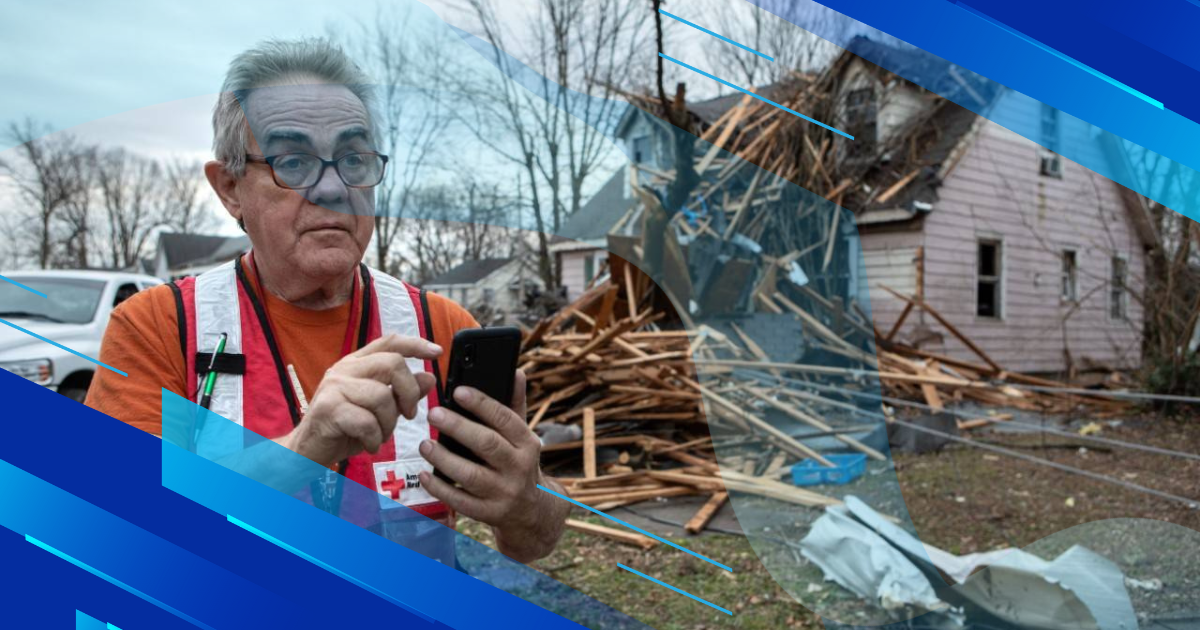
As geopolitical tensions increase and natural disasters like the 2021 Texas Ice Storm, the January 2025 LA fires, and Hurricane Helene impact Americans it isn’t surprising that one third of our adult population identify as preppers.
The National Risk Index by the Federal Emergency Management Agency (FEMA) is a dataset and online tool to help illustrate the U.S. communities most at risk for 18 natural hazards. It was designed and built by FEMA in close collaboration with various stakeholders and partners in academia; local, state and federal government; and private industry. As is evident, many Americans are above moderate risk.
Follow the below tips to get your phone SHTF ready
Your smartphone is one of the most important components of your emergency preparedness. Overlooked by most of the prepared citizen community, the smartphone is a communication, navigation, intelligence collection, and information storage device. Here are some considerations to ensure your smartphone is emergency ready.
Equipment
- Ensure the phone is fully functioning, holds a long charge, and has a decent camera (useful for collecting information). For example, a camera can be useful for insurance purposes as you may need to take pictures of your possessions, documents, and home before you bug out.
- Use a durable screen protector and case.
- Always keep a spare power bank and charging cables.
- Depending on your location or bug out plan, international power socket adapters might be useful.
- Small headphones are useful as well. If they are Bluetooth, make sure they are charged.
Navigation
- Always download offline maps for your navigation apps. If you don’t have internet connection, the map apps on your phone are useless.
- -Download the following map apps or equivalents: Google Maps, OSMandMaps, & MGRS & UTM. Google Maps is super useful as it provides street view, business/institution contact information, traffic status, and public transport routes. “OSMandMaps” works totally offline and provides highly detailed topographic maps. If you carry a map that uses the military grid reference system (MGRS) or Universal Transverse Mercator (UTM) the “MGRS & UTM” app will help you identify your location or the location of points on your map.
- You should also have physical maps of your area and road maps incase something happens to your phone.
Communication
- Ensure your mobile plan is always paid for and has sufficient minutes, texts, and data.
- Download the “WiFi Around” app to locate free Wi-Fi.
- Although not privacy focused, most people use “WhatsApp”, it's still better than regular cell as it is encrypted. WhatsApp allows you to send pictures, videos, and messages to your contacts. You can also share your live location information with them as well as have voice and data calls. If you are looking for something more privacy focused, Signal is a good option.
- If you are an amateur radio operator, download the “Repeater Book” book app to find amateur radio repeaters near you.
Open Source Intelligence
- Download common social media apps such as Twitter, Instagram, and Facebook. On these apps you can find current information on the ongoing disaster. Whether it is civil unrest, a hurricane, wildfire, or Russian paratroopers landing on your town you can be sure that the latest information will be on social media.
- Download a Police radio scanner app. You can get real time information on what police or fire are doing in your area.
- Marine traffic and flight radar apps.
Finance
- Download your banking apps. You may need to transfer money between your accounts or make a payment. Companies don’t stop collecting payments just because your home got burnt down.
- Download payment apps such as Zelle and Paypal. You may not have access to cash and need to quickly pay a business or individual for a service.
Password Management
- Use a password manager on your phone access important accounts such as banking, health care etc.
Digital Backups of Important Documents
- Identification documents (Passport, Driver's License, Birth Certificate)
- Insurance cards/documents
- Property leases, deeds, rental agreements, and vehicle titles
- University transcripts
- Immunization records
- Pay stubs, bank statements
- Debit and credit cards


